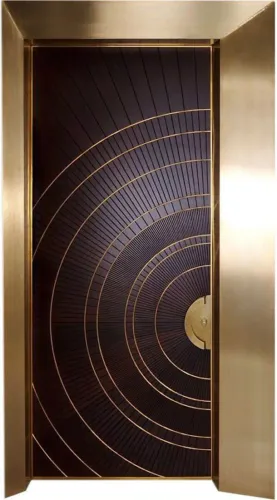
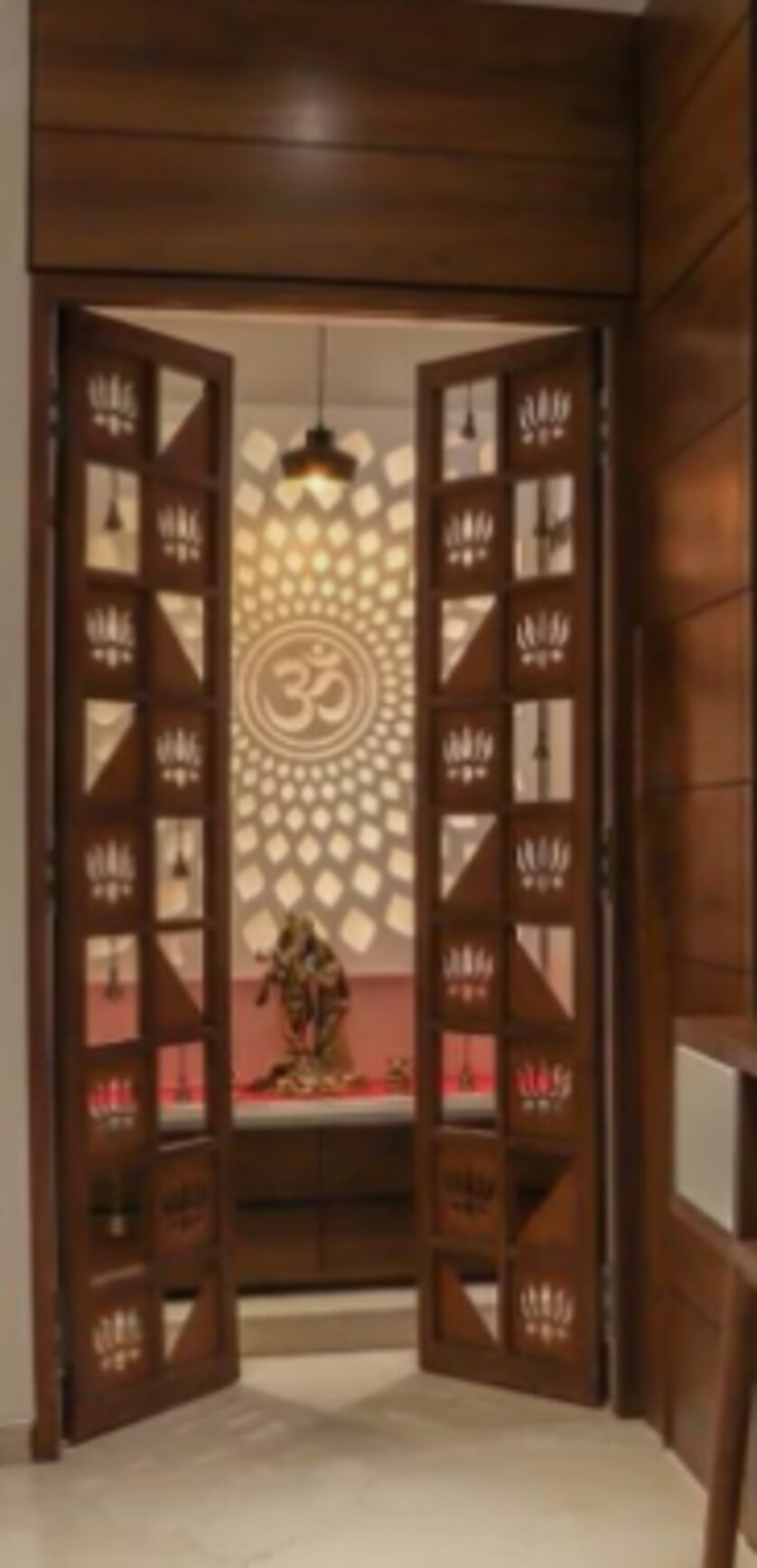
A carved door can look impressive in a reference image yet fail at the opening because the brief omitted swing clearance, timber movement, carving depth, hardware loads or finish requirements. Before you request quotations, define the opening and artwork, then test each manufacturer’s construction method, samples, drawings, inspection process and installation scope.
Key takeaways
- Define opening size, carving depth, timber, finish and budget before requesting quotes.
- Choose solid or engineered construction based on door weight, humidity and fixing conditions.
- Require scaled drawings, carving details, hardware locations and a full-size prototype section.
- Compare timber evidence, installation scope, warranty terms and final acceptance measurements.
What should you define before contacting a manufacturer?
Prepare a measured brief so every manufacturer quotes the same custom pooja room door.
1. Record the finished opening width and height, wall thickness, floor level, and whether installation follows flooring, plaster and paint. Add photographs, a dimensioned plan and an elevation of the opening.
2. Specify a single or double shutter door, hinge side, inward or outward swing, threshold detail and the clear space required for the pooja-room platform, shelves, lamps and daily movement. Note the required reveal around the shutter.
3. Confirm whether you need a separate timber frame, jamb, architrave or a frame that follows an arch. Mark the positions of the latch, magnetic catch, bells, brass fittings and any ventilation opening.
4. Record Vastu preferences for orientation, threshold height, deity placement and opening direction. These preferences do not replace structural clearance, safe access or workable hardware.
5. State whether the carved pooja room door will have a plain carved face, carved panel, carved overlay or integrated frame detailing. This choice changes the construction, carving work and quotation.
6. Ask for a site measurement before final pricing. The installer must verify the finished opening, floor level, wall plumb, frame anchorage, swing clearance and final hardware alignment; a precise door can still fail in an out-of-square opening. Ask when measurement and fitting will occur, and include all corrections in the written scope.
Which door construction and carving method suits the room?
A solid teak carved door is not interchangeable with a veneered carved door. Compare the leaf construction, movement allowance and carving substrate before comparing wood species.
| Construction | Behaviour | Ask the manufacturer |
|---|---|---|
| Solid teak or other solid timber | Deep carving is possible, but wide sections move as humidity changes | Show grain direction, floating-panel details and movement clearances |
| Veneered plywood or blockboard | A more stable core limits seasonal movement; the veneer limits carving depth | Confirm veneer thickness, substrate grade and how edges are sealed |
| MDF | Smooth and consistent for shallow CNC work, but moisture and impact damage weakens edges | Specify moisture protection, edge treatment and repair method |
| Timber frame with carved infill | The frame and infill move differently from a solid slab | Show fixed joints, floating joints and how the infill is retained |
Ask whether the motif is cut directly into solid wood, machined into a stable core, or made as a separate carved moulding fixed to the face. Request the species, kiln-seasoning record and moisture-content readings before machining and again before installation; installing wet timber can cause open joints and panel movement.
A CNC carved door gives repeatable geometry for paired shutters and repeated motifs. A hand carved wooden door permits local correction and visible tool marks, but its variation depends on the carver.
Put these details in the quotation:
- Carving method and acceptable variation
- Repair approach and lead time
- How a wide panel floats, where grain runs, and which joints are fixed
- Whether the sample represents the final substrate and finish
What must the carving drawing and prototype show?
Approve a carving only from a controlled drawing and physical sample, never from a rendered image alone. A render can hide relief depth, undercuts, grain direction and the plain margin required for joinery, producing a beautiful pooja door design that cannot be built safely.
1. Name the exact deity, symbol or motif and require a scaled carving drawing. Show orientation, border width, relief depth, line thickness, symmetry, negative space, corner details, grain direction and the plain joinery margin.
2. Lock the approved CAD or vector artwork before tooling begins. Mark fragile projections near the latch edge, hinge edge and bottom rail, then specify minimum web thickness, sacrificial details or a protected border.
3. Treat relief depth as an engineering decision. Deep relief removes material behind narrow forms, increases transport breakage and creates recesses that are harder to sand, seal, clean and refinish.
4. Request a representative carved sample or full-size carving mock-up in the proposed timber and relief depth. The sample must use the actual sealer, stain, topcoat and edge treatment, not a colour chip on a flat board.
5. Inspect whether finish pools in recesses, hides fine lines, highlights end grain or creates excessive contrast between raised and recessed areas. Record acceptable variation in hand-carved marks, minor grain changes, filled defects and colour.
For paired shutters, show how the motif continues across the meeting stile and whether the border aligns with the frame. Reject approval if the drawing leaves isolated projections without a stated protection strategy.
How do you verify timber quality and door engineering?
Verify timber before carving, when defects remain visible and repairable. Ask for species identification, kiln-seasoning details and a wood moisture content reading from a meter at several points, including near ends and joined sections. “Seasoned wood” does not document moisture, preservative treatment or suitability for an air-conditioned room.
Inspect for:
- Knots, cracks, end checks, insect damage, excessive sapwood, loose fibres and poorly matched glued joints.
- Termite or biological treatment, the named process, treated components and its effect on finish adhesion.
- Protection for exposed edges and fragile carved projections during transport and installation.
The shop drawing must record stile and rail dimensions, panel construction, grain direction, joint locations, diagonal measurements, panel clearances and permitted flatness or warp. A solid panel should normally be a floating carved panel that moves across the grain, not a wide piece rigidly glued into its frame.
| Construction | Movement behaviour | Detail to confirm |
|---|---|---|
| Solid carved panel | Greater carving depth, more seasonal movement | Floating edges and clearances |
| Carved overlay | Less material removed from the door core | Secure fixing and protected edges |
| Rigid glued panel | Splits, raised joints or frame distortion | Reject unless movement is specifically engineered |
For door leaf engineering, ask how carving depth affects the section behind projections and whether the bottom rail and hinge stile remain strong. Require finished leaf weight, centre-of-gravity assumptions, hinge load rating, reinforcement details and access for adjustment or replacement. Hinge quantity is not a load calculation; pivots or concealed closers need matching capacity.
How should you compare quotations, installation and final acceptance?
A low carved door quotation often hides costs in “complete supply,” so require an itemised carved door quotation before comparing totals.
| Stage | Separate line items |
|---|---|
| Pre-production | Site measurement; design development; engineering; drawing revisions; carving sample |
| Manufacture | Timber; carving; finishing; hardware; frame |
| Logistics | Delivery; installation; touch-up |
Check exclusions for architraves, threshold alterations, wall repairs, colour matching and removal of packaging. Ask how the finish will withstand incense smoke, cooking vapour and frequent wiping, and whether a local repair will blend with the surrounding sheen.
Treat custom door installation as a separate capability check. The installer must verify the finished opening, wall plumb, floor level, frame anchorage, swing clearance and hardware alignment. Confirm whether fitting follows wet plaster, paint and flooring; premature installation can expose the door to movement, stains and impact.
Madhav Tradelink can be compared with other wood door manufacturers, but general woodwork supply does not prove hand-carving, CNC-carving or custom pooja-room engineering experience. Request relevant drawings, carving samples and a written scope instead of relying on a catalogue.
Put this door acceptance checklist in the purchase order, and approve the door only when every check passes:
- Leaf dimensions and diagonals, flatness, full-swing operation, uniform reveals and latch alignment
- Carving continuity, finish coverage in recesses, loose fibres and filled defects
- Transport damage, including dents, scratches, chipped projections and broken details
Related products
 | doors, wooden doors , teak wood doors Madhav Tradelink In New Delhi are amongst the most sought after manufacturers who deal with high-quality wooden veneer, exclusive laminates,... View product → |
 | doors, wooden doors , teak wood doors Madhav Tradelink In New Delhi are amongst the most sought after manufacturers who deal with high-quality wooden veneer, exclusive laminates,... View product → |
Frequently asked questions
What should you define before contacting a carved pooja room door manufacturer?
Prepare the opening width and height, wall thickness, swing direction, threshold, timber preference, carving style, finish, hardware, delivery location and target budget.
Which door construction and carving method suits a pooja room?
Choose solid timber, engineered timber or a framed panel door after considering door weight, humidity, opening size and the carving depth required. CNC carving suits repeatable geometry, while hand carving suits irregular and highly detailed motifs.
What must the carving drawing and prototype show?
The drawing should show overall dimensions, stile and rail widths, panel layout, motif scale, carving depth, edge clearances, hinge and latch positions, finish and grain direction. Approve a full-size section or representative sample before production.
How do you verify timber quality and door engineering?
Ask for the timber species, moisture reading, board or veneer construction, joint details, core specification and treatment records. Check that the frame, hinges, screws, seals and wall anchors are sized for the finished door weight.
How should you compare quotations, installation and final acceptance?
Compare each quote using the same dimensions and specifications, then separate timber, carving, finish, hardware, transport, installation, taxes and warranty. Accept the door after checking dimensions, swing, clearances, carving, finish, hardware operation and visible damage.
Related product
 | doors, wooden doors , teak wood doors Door Madhav Tradelink In New Delhi are amongst the most sought after manufacturers who deal with high-quality wooden veneer, exclusive laminates,... |