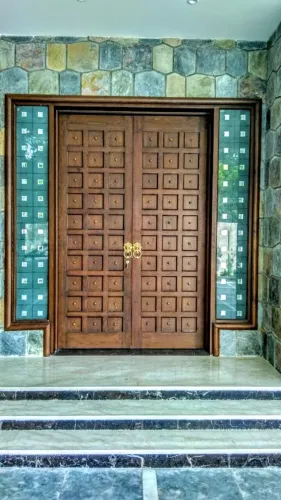
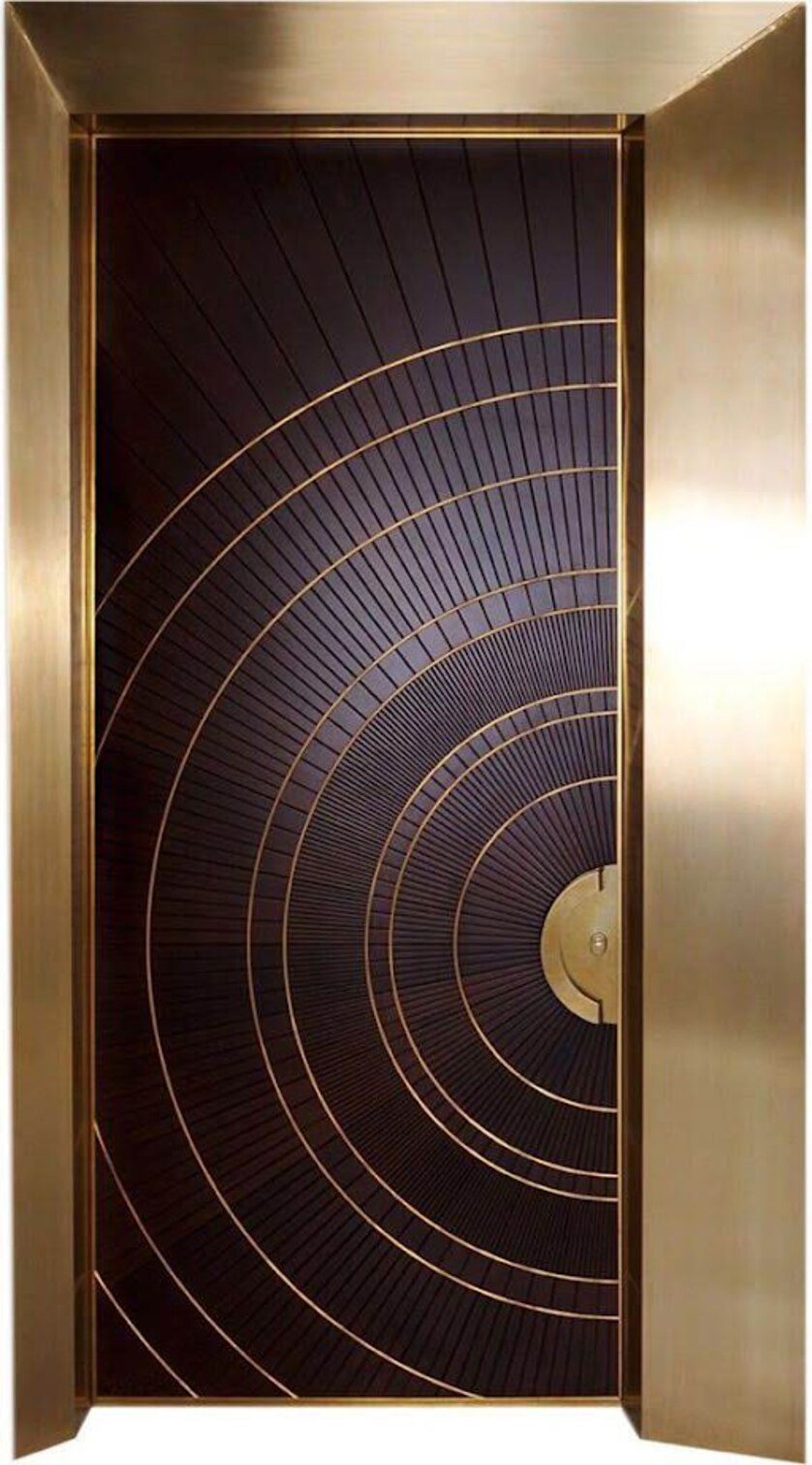
A door that looks right in a sample can still swell at the threshold, transmit hallway noise, miss the latch, or fail to suit a bathroom or fire-separation requirement. By checking the construction, complete doorset, opening measurements, performance details and installation scope, you can compare custom quotations on evidence rather than surface design.
Key takeaways
- Choose door construction based on exposure, moisture and room use.
- Specify the core, timber, veneer, laminate and finish in writing.
- Treat entrance doors as complete weatherproof and security assemblies.
- Confirm measurements, installation details and maintenance requirements before ordering.
Match the Door Construction to the Room and Exposure
Choose construction by exposure, not weight. The leaf, or shutter, is the moving slab; the frame supports it, while the architrave covers the frame-to-wall joint. A veneer is thin real wood bonded over a core; a laminate face is a hard decorative sheet. Solid timber runs through the leaf.
For an entrance, rain, sunlight, humidity, insects, forced entry and repeated use matter more than a heavy teak label. An engineered core with stable timber components often resists cupping better than a broad solid-wood slab.
| Option | Stability and weight | Appearance, repair, maintenance and effort |
|---|---|---|
| Solid-wood door | Heavy; moves more with humidity | Rich appearance; repairable by sanding, but costly and demanding to maintain |
| Veneered door | Lighter and more stable | Natural timber appearance; limited deep repairs and moderate care |
| Laminated door | Stable, practical weight | Easy to clean and stain-resistant; difficult to refinish, with moderate effort |
| Flush door | Smooth, core-based construction | Simple appearance, efficient maintenance and cost |
| Panel door | Stile-and-rail construction; movement needs detailing | Traditional appearance, repairable parts, more joints to maintain |
For a bedroom, choose a solid-core flush or veneered door for privacy. A bathroom needs a laminated door or sealed veneer, edge clearance and ventilation; a kitchen benefits from a wipe-clean laminate. Offices need durable faces and hardware for repeated cycles.
This flush door versus panel door comparison enables readers to choose based on the room’s actual demands rather than appearance alone.
Specify the Core, Timber, Veneer and Finish Precisely
Request the door core material, timber species, construction method, veneer thickness, veneer lay-up, edge banding, joinery, panel movement detail and measured timber moisture content.
Because moisture movement in wood is greater across the grain than along it, floating panel joinery matters: panel-and-frame doors need floating panels and suitable clearances instead of rigidly fixing a wide panel around its perimeter.
In New Delhi, seasonal expansion and contraction can cause warping, cupping, cracking and joint opening. Acclimatise the door in its installation environment before fitting it. Treat “waterproof flush door” as an unproven claim: ask whether it means a moisture-resistant face, a treated core or a tested complete assembly, then request the test method and limitations.
Specify these finish details in writing:
- Coating system and coat count
- Edge and end-grain treatment
- Interior or exterior exposure
- Cleaning method and maintenance interval
| Finish | Scratch and stain | UV and refinishing |
|---|---|---|
| Polyurethane | Strong resistance | Good; sanding needed |
| Melamine | Good; limited repair | Moderate; difficult to refinish |
| Natural oil | Lower resistance | Moderate; easy spot repair |
| Paint | Good with full coverage | Can fade; repaintable |
| Laminate | High surface resistance | Good; replacement, not refinishing |
A finish that stops at the face leaves edges and bottom rails vulnerable to moisture and abrasion.
Treat an Entrance as a Complete Weather and Security Assembly
A custom entrance is a complete weather and security assembly, not a door slab. Specify the finished floor level, sill pan and threshold, end dams, a sloped or drained sill, overhang, weatherstripping, and frame-to-wall flashing. Trapped water will defeat an excellent finish.
- Record frame material and depth, door frame anchoring, leaf thickness, core density, hinge count and size, bearing type, lock-case preparation, reinforced strike plate, cylinder compatibility, closer capacity, and wall backing.
- Design for entrance door security against forced entry, including hinge-side protection, strong fasteners, and a strike that transfers load into structural backing.
- Test the complete opening for rain, air leakage, insects, and sunlight; exterior door weatherproofing depends on seals and drainage as much as coatings.
- Support a tall or heavy leaf with pivots, additional hinges, or structural reinforcement. Otherwise it can sag, lose latch alignment, and open gaps in leaking seals.
- Check the usable clear opening with the door at 90 degrees and measure the threshold. Under ADA criteria, a covered U.S. facility generally needs 32 inches of clear width and a threshold no higher than 1/2 inch; nominal leaf width is not usable width.
- Treat a balcony, exposed entrance, or wet location as unsuitable for wood unless drainage, clearance, sealants, and ventilation are fully detailed.
Set Interior Doors for Privacy, Sound, Fire and Wet Areas
Choose the core by the room’s failure risk, not appearance.
| Room | Recommended specification | Main check |
|---|---|---|
| Bedroom | Solid core for privacy; acoustic door STC only when the complete assembly is tested | Seals and wall construction |
| Bathroom or utility room | Moisture-resistant leaf, sealed edges and adequate bathroom door moisture clearance | Swelling, ventilation and cleaning chemicals |
| Kitchen | Solid or durable laminated core for impact and cleaning | Fire separation only where the design requires it |
| Corridor or office | Solid core for traffic; acoustic core for confidential rooms | Cycle rating, closer and latch alignment |
| Apartment entrance | Tested fire-rated wood doorset where the wall or code requires separation | Listed frame, hardware, seals and installation |
A hollow core reduces weight and cost but provides weak privacy and sound control. A solid core improves privacy and durability; an acoustic core adds tested sound reduction, but performance belongs to the leaf, frame, perimeter door seals, drop seal and threshold gap, glazing, wall and installation.
Request a published STC value only when that tested assembly matches your construction.
A decorative timber door is not a fire door. Where a bedroom, kitchen, corridor, office or apartment entrance opens onto a required fire separation or escape route, specify a listed or labelled fire-rated wood doorset with compatible frame, hardware, glazing and installation. Field cutting, drilling or hardware changes can void the rating.
Ensure ventilation, sealed edges and clearance above finished flooring in wet rooms. Offices also need frequent-cycle hardware, manageable closer force and an accessible clear opening.
Use a Site Measurement and Quotation Checklist Before Ordering
Approve a custom door only after a site measurement checklist and shop drawing confirm the actual structural opening, finished-floor level, wall thickness, frame depth, plumb and square, casing or architrave conditions, handing, swing direction, swing clearance, threshold details and tolerances for uneven masonry.
Measuring before finished flooring is installed creates a common failure: the leaf fits the nominal opening but strikes the completed floor or misses the latch. Include the flooring build-up and verify the opening again before fabrication.
Use this custom door quotation checklist:
1. Record the door schedule, leaf and frame build-up, timber or core specification, veneer sequence, permitted colour variation, finish sample, hardware, lock and cylinder, hinges, stopper, seals and glazing.
2. Add transport, protection during construction, removal of the old door, final adjustment, delivery lead time, warranty exclusions and snag rectification. Ask Madhav Tradelink or another manufacturer to price this same schedule, so quotes describe equivalent assemblies rather than different assumptions.
3. Allow added coordination for unusual sizes, curved details, matched veneer elevations or bespoke hardware. Confirm who approves shop drawings, checks site dimensions and resolves uneven masonry before production.
Related products
 | Laminated door, Flush door, best Flush door, waterproof Flush door, "Madhav Tradelink In New Delhi are known as the most trusted and popular manufacturer of the best quality Wooden Door, Wooden Pillars, Wooden... View product → |
 | doors, wooden doors , teak wood doors Madhav Tradelink In New Delhi are amongst the most sought after manufacturers who deal with high-quality wooden veneer, exclusive laminates,... View product → |
Inspect, Install and Maintain the Door as Specified
At delivery, complete a door delivery inspection before signing. Photograph defects and record them against the approved drawing and finish sample.
- Inspect the leaf for bowing, twist, cupping, veneer bubbles and delamination, open joints, inconsistent colour, edge damage and unsealed end grain.
- Check the frame for plumb; test hinge alignment, smooth latch-and-strike engagement, and continuous seal contact.
Follow the approved shop drawing to prevent door installation defects. Verify frame anchoring, threshold drainage, finished-floor clearances and hardware adjustment, then protect the assembly from dust, paint and standing water during construction.
Match wood door maintenance to the finish: use the specified cleaner, avoid abrasive pads and harsh solvents, and record exterior recoating intervals.
| Mistake | Why it fails | Check before approval |
|---|---|---|
| Choosing by surface design alone | A decorative face cannot prove stability or weather resistance | Review core, construction, finish and exposure |
| Assuming teak guarantees stability | Species alone does not prevent movement, cupping or joint opening | Request construction details and moisture limits |
| Putting a heavy entrance leaf on a weak interior frame | The frame can sag, misalign the latch and break seals | Confirm frame anchoring, hinges and reinforcement |
| Omitting bathroom clearance | Moisture and floor movement can cause rubbing and swelling | Confirm finished-floor gap, sealed edges and ventilation |
| Accepting “waterproof” without a test method | The claim may cover only the face, not the complete assembly | Request the test method, scope and limitations |
Go or no-go: approve only when the complete opening, materials, performance evidence and after-sales scope are documented.
Frequently asked questions
How should door construction match the room and exposure?
Choose the leaf construction according to exposure, moisture, traffic and room use rather than judging quality by weight alone. Exterior entrances need greater resistance to weather and security demands than protected interior rooms.
What should you specify for a custom wooden door?
Record the core, timber species, veneer or laminate face, finish, leaf thickness, frame material and hardware. These details prevent a quotation from using vague terms such as “wooden door.”
What does an entrance door assembly need besides the door leaf?
Specify the frame, architrave, hinges, lockset, threshold, weather seals, drainage details and installation method. Security and weather performance depend on the complete assembly, not the leaf alone.
What should you check before ordering and installing wooden doors?
Verify site measurements, wall openings, handing, swing direction, clearances, frame dimensions, hardware, finish samples and delivery access. Inspect the door on arrival, install it to the agreed specification and follow the finish and maintenance instructions.
Related products
 | doors, wooden doors , teak wood doors Madhav Tradelink In New Delhi are amongst the most sought after manufacturers who deal with high-quality wooden veneer, exclusive laminates,... View product → |
 | doors, wooden doors , teak wood doors Door Madhav Tradelink is a one stop destination if you are looking at buying Veneers and Laminates to suit your style! We have a wide range of... |
 | doors, wooden doors , teak wood doors Madhav Tradelink In New Delhi are amongst the most sought after manufacturers who deal with high-quality wooden veneer, exclusive laminates,... View product → |